
Will Invisalign Fix a Gap? How Long It Really Takes to See Results
If you have a gap between your teeth, you've probably wondered whether Invisalign can fix it without the need for traditional braces. The good news is that gaps between teeth are actually one of the most common issues treated with clear aligners.

In many cases, Invisalign and other clear aligner systems can successfully close small, moderate, and even larger gaps while providing a discreet alternative to braces.
However, not every gap is caused by the same issue.
The size of the space, the location of the gap, your bite relationship, and the underlying cause all play important roles in determining whether clear aligners are the best solution.
As dentists specializing in cosmetic and general dentistry, one of the most common questions we hear is: "Will Invisalign fix a gap?"
For many patients, the answer is yes.
In this guide, we'll explain how Invisalign works for gap closure, what types of gaps respond best to treatment, how long Invisalign treatment may take, and what patients should know before starting treatment.
What Causes Gaps Between Teeth?
Before discussing treatment, it's important to understand why gaps form in the first place.
The dental term for spaces between teeth is diastema.
Several factors can contribute to gap formation.
Genetics
Many patients naturally inherit tooth and jaw sizes that create spacing.
Missing Teeth
When a tooth is missing, neighboring teeth may drift and create gaps.
Small Teeth
Some people simply have teeth that are proportionally smaller than their jaw.
Gum Disease
Advanced periodontal disease can cause teeth to shift and create spaces.
Tongue Thrusting
Repeated pressure from the tongue can gradually push teeth apart over time.
Understanding the cause helps determine the most effective treatment plan.
Will Invisalign Fix a Gap?
In many situations, yes.
In fact, closing gaps is one of the most predictable applications of clear aligner therapy.
According to Invisalign's overview of gap teeth treatment, clear aligners can effectively move teeth closer together and reduce unwanted spacing in many cases.
Small Gaps
Minor spacing often responds very quickly to treatment.
Moderate Gaps
Many moderate gaps can be closed successfully with clear aligners.
Larger Gaps
Larger spaces may require longer treatment times and more comprehensive planning, but they can often still be corrected.
How Invisalign Works to Close Gaps
Patients frequently ask how Invisalign works when treating spaces between teeth.
Custom Treatment Planning
The process begins with digital scans and treatment planning.
Gradual Tooth Movement
Each aligner applies gentle pressure that gradually moves teeth into new positions.
Sequential Aligners
Patients wear a series of aligners, with each set moving the teeth slightly closer to the final goal.
Controlled Space Closure
The aligners are designed to move teeth strategically so that gaps close while maintaining proper bite function.
This controlled movement is one reason clear aligners have become so popular.
Why Gaps Are Often Ideal for Clear Aligners
Not all orthodontic problems respond equally well to aligner therapy.
Gap closure happens to be one of the areas where aligners often perform exceptionally well.
Predictable Tooth Movement
Moving teeth into open spaces is often more predictable than correcting severe crowding.
Excellent Cosmetic Improvement
Patients frequently notice visible changes relatively early in treatment.
Comfortable Treatment
Clear aligners provide a comfortable and discreet alternative to braces.
For many adults, this is a major advantage.
How Long Invisalign Treatment Takes for Gaps
One of the most common questions we receive is:
How long Invisalign treatment takes?
Or:
How long Invisalign take to close a gap?
Small Gaps
Some patients begin noticing improvements within a few months.
Treatment may be completed in as little as 6 months.
Moderate Gaps
Many cases require approximately 6–12 months.
Larger Gaps
More complex cases may require 12–18 months or longer.
The exact timeline depends on:
- Gap size
- Number of teeth involved
- Bite complexity
- Patient compliance
How Important Is Patient Compliance?
The success of clear aligner treatment depends heavily on compliance.
Recommended Wear Time
Most providers recommend wearing aligners:
20–22 hours per day
Why It Matters
Aligners only work when they are being worn.
Patients who frequently remove them often experience:
- Slower progress
- Delayed results
- Additional refinements
Even the most advanced aligner system cannot compensate for inconsistent wear.
Are Invisalign Better Than Braces for Closing Gaps?
Another common question is:
Are Invisalign better than braces?
The answer depends on the case.
Advantages of Invisalign
Clear aligners offer:
- Better aesthetics
- Easier brushing and flossing
- Greater comfort
- Removability
Advantages of Braces
Traditional braces may provide additional control in certain complex orthodontic situations.
For Gap Closure
Many gap cases respond extremely well to clear aligners.
For straightforward spacing issues, aligners often provide results comparable to braces.
What If the Gap Is Caused by Gum Disease?
This is an important distinction.
Treat the Cause First
If periodontal disease caused the spacing, addressing gum health becomes the priority.
Stabilization Before Orthodontics
Teeth should be healthy and stable before orthodontic movement begins.
Long-Term Success
Correcting the underlying problem helps reduce the risk of future spacing.
Invisalign vs Other Clear Aligners for Gap Closure
Many patients assume Invisalign is the only clear aligner option.
That's not necessarily true.
There are several high-quality aligner systems available today.
Treatment success typically depends more on:
- Diagnosis
- Treatment planning
- Provider experience
- Patient compliance
than on the specific aligner brand.
Patients interested in exploring treatment options can learn more about our clear aligner treatment services and determine which solution may be best for their needs.
Invisalign Retainer: Preventing Gaps From Returning
One of the most important parts of treatment happens after the aligners come off.
Teeth Naturally Shift
Teeth have a tendency to drift over time.
Invisalign Retainer Use
An Invisalign retainer helps maintain the new tooth positions.
Why Retainers Matter
Without retainers, gaps may gradually reopen.
Long-term retainer wear is one of the biggest factors influencing treatment stability.
Invisalign How Much Does Gap Treatment Cost?
Cost is another major consideration.
Invisalign How Much?
The exact cost depends on:
- Gap size
- Treatment complexity
- Geographic location
- Provider experience
Smaller Cases
Simple spacing corrections may cost less than full orthodontic treatment.
More Comprehensive Cases
Larger gaps or bite-related issues may require more extensive treatment plans.
Most providers offer consultations that include customized pricing information.
Invisalign Dental Insurance Coverage
Patients often ask whether Invisalign dental insurance benefits are available.
Does Insurance Cover Invisalign?
Sometimes.
Coverage depends on:
- Your insurance plan
- Orthodontic benefits
- Age limitations
Partial Coverage Is Common
Many plans contribute a portion of orthodontic treatment costs.
Verify Benefits Early
Insurance verification before treatment helps avoid surprises.
Invisalign Close to Me: How to Choose the Right Provider
Searching online for Invisalign close to me often produces many options.
How do you choose?
Look for Experience
Ask about:
- Gap closure cases
- Before-and-after photos
- Clear aligner experience
Comprehensive Evaluations Matter
A quality consultation should include:
- Digital scans
- Bite evaluation
- Treatment recommendations
- Timeline discussion
The provider often has a bigger impact on results than the aligner brand itself.
Can Veneers Be Better Than Invisalign for Gaps?
Some patients are surprised to learn there may be multiple solutions.
Invisalign
Moves teeth into better positions.
Veneers or Bonding
May improve appearance without moving teeth.
Which Is Better?
The answer depends on:
- Gap size
- Bite health
- Cosmetic goals
- Long-term objectives
Many patients prefer correcting the actual tooth positions whenever possible.
What Research Says About Clear Aligners
Research continues to support clear aligners as an effective treatment for many orthodontic concerns.
The orthodontic experts at The Orthodontists note that spacing issues are among the orthodontic conditions that often respond well to clear aligner therapy.
This aligns with what many dental professionals see clinically every day.
Open Bite and Gap Treatment Sometimes Overlap
Patients with spacing issues occasionally have other bite concerns as well.
For example, some individuals have both gaps and open bites.
If you're curious about how aligners address more complex bite issues, our article on whether Invisalign can fix an open bite provides additional insight.
Our Perspective at Vero Dental
At Vero Dental, we believe every orthodontic treatment plan should be customized to the individual patient.
Many people assume that a gap automatically requires braces, while others assume aligners can solve every problem.
The truth lies somewhere in the middle.
For many patients, clear aligners provide an excellent solution for closing spaces between teeth while maintaining comfort, convenience, and aesthetics.
What matters most is:
- Proper diagnosis
- Thoughtful treatment planning
- Consistent aligner wear
- Long-term retention
Our goal is always to recommend the option that creates the healthiest, most stable, and most attractive outcome—not simply the most popular treatment.
Frequently Asked Questions
Will Invisalign Fix a Gap?
Yes. Many small, moderate, and even larger gaps can be successfully treated with Invisalign or other clear aligner systems.
How Long Invisalign Treatment Takes to Close a Gap?
Many gap cases require 6–12 months, although treatment time varies depending on complexity.
Are Invisalign Better Than Braces for Gaps?
For many spacing cases, clear aligners provide results comparable to braces while offering greater convenience and aesthetics.
Will I Need an Invisalign Retainer?
Yes. Retainers are typically necessary to maintain treatment results and prevent gaps from reopening.
Does Invisalign Dental Insurance Help Cover Treatment?
Some insurance plans provide orthodontic benefits that may partially offset treatment costs.
Final Thoughts on Will Invisalign Fix a Gap
So, will Invisalign fix a gap?
For many patients, the answer is yes.
Gap closure is one of the most common and predictable applications of clear aligner therapy. Whether you're dealing with a small space between your front teeth or multiple gaps throughout your smile, clear aligners can often provide an effective, discreet, and comfortable solution.
However, the best results come from proper diagnosis, careful planning, and consistent wear. The size of the gap, the cause of the spacing, and your overall oral health all influence the ideal treatment approach.
If you're considering clear aligners, a professional consultation can help determine whether Invisalign or another aligner system is the right fit for your smile goals.
Related posts
Discover the art of enhancing your smile.
-RESIZED.webp)
The Real Benefits of Cosmetic Dentistry (It’s More Than Just a Better Smile)
At Vero Dental, we believe cosmetic dentistry isn’t about vanity. It’s about confidence, comfort, and feeling like the best version of yourself. If you’ve ever felt self‑conscious about your teeth, cosmetic dentistry may be the solution you didn’t realize could make such a big difference.

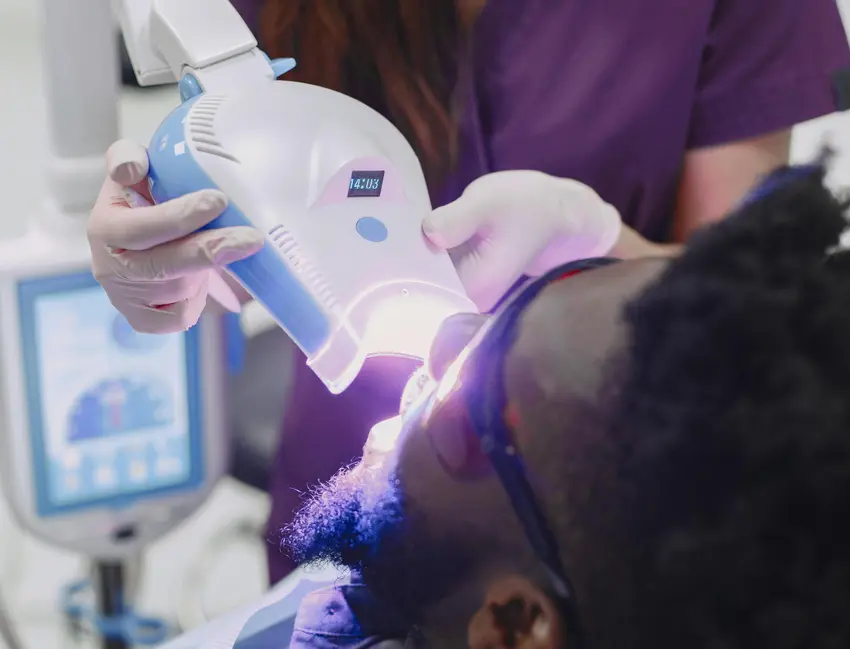
Professional Teeth Whitening: The Fastest Way to Get a Brighter Smile?
A brighter smile is one of the most requested cosmetic dental improvements, and for good reason. White teeth are often associated with health, confidence, and youthfulness. But despite the popularity of whitening products, many people still wonder how whitening actually works and whether it’s safe for their teeth.
%20(1).png)
How Long Do Clear Aligners Take? What Changes the Timeline for Gaps, Crowding, and Bite Issues
Learn what changes a clear aligner timeline for gaps, crowding, and bite issues, plus the habits that help treatment stay on schedule.