

It's a fair question. Walk through any pharmacy and you'll find shelves full of whitening strips, whitening toothpaste, whitening pens, whitening kits, and other teeth whitening products all promising a brighter smile. At the same time, you've likely heard warnings online claiming whitening strips damage enamel, weaken teeth, or cause permanent sensitivity.
So what's the truth?
The good news is that most teeth whitening strips are considered safe when used correctly. In fact, many whitening products use similar active ingredients to those found in professional whitening treatments. However, that doesn't mean they're right for everyone.
As experienced cosmetic and general dentists, we've helped countless patients improve their smiles through whitening treatments. In this article, we'll explain how whitening strips work, whether they can damage your teeth, common side effects, and how they compare to professional whitening options.
Teeth Whitening Strips
Before discussing whether whitening strips are harmful, it helps to understand how they work.
Most teeth whitening strips are thin pieces of plastic coated with a peroxide-based teeth whitening gel. The active ingredients are typically:
- Hydrogen peroxide
- Carbamide peroxide
These ingredients penetrate the enamel and break apart stain molecules trapped within the tooth structure.
Contrary to popular belief, whitening strips do not "scrape" stains off the teeth. Instead, they use a chemical process that changes how stain molecules reflect light, making teeth appear whiter.
This same basic whitening mechanism is used in many professional teeth whitening treatment options performed by dentists.
Are Teeth Whitening Strips Actually Bad for Your Teeth?
The short answer is usually no.
When used according to the manufacturer's instructions, most whitening strips are considered safe for healthy teeth.
Research published through the National Institutes of Health has consistently found that peroxide-based whitening products can effectively whiten teeth without causing permanent damage to healthy enamel when used appropriately.
Similarly, experts at Johns Hopkins Medicine note that whitening products are generally safe when used as directed and when patients have healthy teeth and gums.
That said, there are situations where whitening strips can create problems.
Whitening Strips May Cause Temporary Sensitivity
The most common side effect of whitening strips is tooth sensitivity.
During the whitening process, peroxide temporarily opens microscopic pathways within the tooth structure. This allows whitening ingredients to reach deeper stains, but it can also make teeth more sensitive to:
- Cold drinks
- Hot beverages
- Air exposure
- Sweet foods
Fortunately, this sensitivity is typically temporary and often resolves within a few days after treatment.
Whitening Strips Can Irritate Gums
Another common issue occurs when the whitening gel comes into contact with gum tissue.
This can result in:
- Mild irritation
- Temporary redness
- A burning sensation
These symptoms usually disappear quickly once whitening treatment is discontinued.
Overusing Whitening Products Can Create Problems
One of the biggest mistakes people make is assuming that if whitening works, more whitening must work even better.
Unfortunately, excessive use of whitening strips can increase sensitivity and irritation without necessarily producing better results.
This is why following instructions carefully is so important.
Can Teeth Whitening Strips Damage Enamel?
One of the biggest myths surrounding whitening strips is that they destroy enamel.
Current research does not support this claim.
Studies have found that peroxide-based whitening treatments do not permanently remove healthy enamel when used correctly. While whitening can temporarily alter the surface of enamel, these changes are generally reversible and do not result in long-term damage.
In fact, many professional whitening systems use significantly higher concentrations of peroxide than store-bought strips while still maintaining a strong safety profile under professional supervision.
The key phrase here is healthy enamel.
If someone already has:
- Cavities
- Cracked teeth
- Exposed roots
- Significant enamel erosion
then whitening may worsen symptoms or discomfort.
This is one reason why a dental evaluation is often recommended before beginning any whitening program.
Teeth Whitening Strips for Sensitive Teeth
Many brands now offer teeth whitening strips for sensitive teeth.
These products are designed with lower concentrations of whitening ingredients and often recommend shorter wear times.
The advantages include:
- Less sensitivity
- Reduced gum irritation
- More comfortable treatment
However, the tradeoff is that results often take longer to achieve.
For patients with significant sensitivity, professional guidance is usually preferable to experimenting with multiple over-the-counter whitening products.
Teeth Whitening Products: Not All Are Created Equal
Today's market includes a huge variety of teeth whitening products.
Common options include:
- Whitening strips
- Whitening toothpaste
- Whitening pens
- Whitening trays
- Professional whitening systems
- Whitening rinses
Each option has advantages and disadvantages.
The best choice depends on:
- Your level of staining
- Sensitivity
- Budget
- Desired speed of results
Teeth Whitening Toothpaste
Many people assume teeth whitening toothpaste works the same way as whitening strips.
In reality, most whitening toothpastes function differently.
Instead of bleaching stains internally, whitening toothpaste typically uses mild abrasives to remove surface stains.
This can help maintain results after whitening treatment, but it usually cannot dramatically change the underlying color of the teeth.
Whitening toothpaste is best viewed as a maintenance product rather than a primary whitening solution.
Teeth Whitening Pen
Another popular option is the teeth whitening pen.
A whitening pen contains a peroxide-based gel that is brushed directly onto the teeth.
Benefits include:
- Convenience
- Portability
- Easy touch-ups
However, whitening pens generally contain lower concentrations of active ingredients and may produce more subtle results compared to whitening strips or professional whitening treatments.
Many patients use a whitening pen to maintain results after completing a more comprehensive whitening program.
Teeth Whitening Kit Options
A teeth whitening kit may include:
- Whitening trays
- Whitening gel
- LED lights
- Whitening strips
Some kits can be effective, while others primarily rely on marketing.
One challenge with many whitening kits is that they are designed to fit a wide range of mouths. Because they aren't customized, whitening can sometimes be uneven.
Professional custom trays often provide more consistent results because they are made specifically for the patient's teeth.
Teeth Whitening Bleach: Is It Safe?
Some people become concerned when they hear whitening products described as teeth whitening bleach.
While peroxide-based whitening agents technically function as bleaching agents, they are very different from household bleach.
Dental whitening products are specifically formulated for use in the mouth and are extensively tested for safety.
The term "bleach" often sounds alarming, but when discussing dental whitening, it simply refers to the chemical process used to break down stain molecules.
Teeth Whitening Home Remedies
The internet is full of suggestions for teeth whitening home remedies.
Common examples include:
- Activated charcoal
- Lemon juice
- Apple cider vinegar
- Coconut oil pulling
Unfortunately, many of these methods lack strong scientific evidence and may actually damage enamel.
Acidic substances like lemon juice and vinegar can erode enamel over time, potentially causing more harm than good.
Teeth Whitening Naturally
Patients often ask whether it's possible to whiten teeth naturally.
The truth is that true whitening generally requires peroxide-based ingredients.
However, you can reduce staining naturally by:
- Limiting coffee and tea
- Avoiding tobacco products
- Maintaining good oral hygiene
- Drinking water after staining beverages
While these habits help preserve a brighter smile, they typically cannot produce the same results as professional whitening.
Teeth Whitening Baking Soda
One of the most common DIY approaches involves teeth whitening baking soda.
Baking soda can remove some surface stains because it is mildly abrasive.
However, it does not bleach internal tooth discoloration.
While occasional use is generally safe, aggressive scrubbing with baking soda may contribute to enamel wear over time.
Teeth Whitening Dentist
If you're concerned about whitening safety or want the most predictable results, working with a teeth whitening dentistis often the best option.
A dentist can determine:
- Whether whitening is appropriate
- The cause of discoloration
- Which whitening method is likely to work best
- How to minimize sensitivity
Professional supervision can also help identify underlying dental issues before whitening begins.
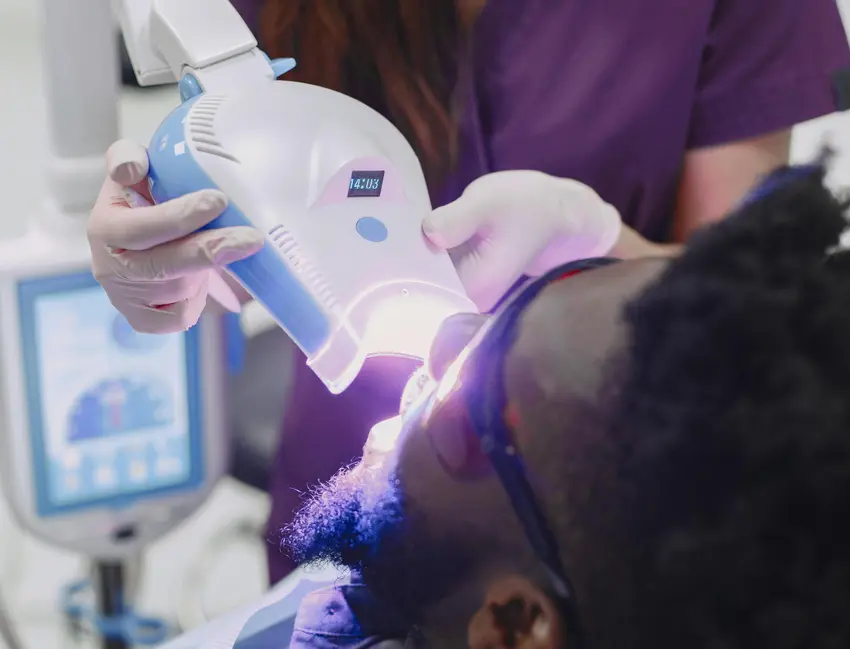
Teeth Whitening at Dentist Offices
Many patients ultimately choose teeth whitening at dentist offices because it offers several advantages over store-bought products.
Professional whitening treatments typically provide:
- Faster results
- Stronger whitening agents
- Better monitoring
- Reduced risk of uneven whitening
Many patients see noticeable improvements after a single appointment.
Professional whitening also allows dentists to customize treatment based on the patient's goals and sensitivity levels.
Teeth Whitening Cost: Is Professional Whitening Worth It?
One reason many patients start with whitening strips is the lower teeth whitening cost.
Store-bought strips often cost significantly less than professional treatment.
However, value isn't always measured solely by price.
Professional whitening may offer:
- Better results
- Faster results
- Longer-lasting results
- Greater comfort
For many patients, the investment is worthwhile because it eliminates the trial-and-error process of testing multiple products.
Teeth Whitening Near Me
If you've been searching for teeth whitening near me, you may be wondering whether professional treatment is worth considering.
A consultation allows a dentist to evaluate:
- Existing restorations
- Tooth sensitivity
- Staining type
- Oral health
This evaluation helps determine whether whitening strips are appropriate or if another treatment would be more effective.
At Vero Dental, patients can also explore cosmetic treatment options through our virtual consultation.
Patients considering more comprehensive smile improvements may also benefit from learning about veneers:
https://verodental.com/services/porcelain-veneers
What We Tell Patients at Vero Dental
At Vero Dental, our position on whitening strips is straightforward.
We don't think whitening strips are inherently bad for your teeth.
For many patients with healthy teeth and mild staining, they can be a reasonable option.
However, we also recognize their limitations.
Whitening strips aren't customized. They may not whiten evenly. They can cause sensitivity. And they often don't deliver the same results as professional whitening.
Our goal is never to push patients toward the most expensive option. Instead, we focus on helping each patient choose the whitening solution that best matches their goals, sensitivity level, and budget.
Sometimes that means whitening strips.
Sometimes it means professional whitening.
Sometimes it means exploring alternative cosmetic treatments altogether.
Final Thoughts
So, are teeth whitening strips bad for your teeth?
For most people, the answer is no.
When used correctly and on healthy teeth, whitening strips are generally safe and effective. The most common side effects—sensitivity and mild gum irritation—are typically temporary.
That said, whitening strips aren't always the best solution. Patients with significant staining, sensitivity, dental restorations, or underlying oral health concerns may benefit from consulting a teeth whitening dentist before beginning treatment.
Whether you're considering whitening strips, a whitening pen, a whitening kit, or professional teeth whitening treatment, understanding your options is the first step toward achieving a brighter, healthier-looking smile.
Related posts
Discover the art of enhancing your smile.

Let's Take Care Of Those Teeth Stains
The effectiveness of teeth whitening at Stephen VeroDental in Lehi UT depends in part on the types of stains you have.

Professional Teeth Whitening: The Fastest Way to Get a Brighter Smile?
A brighter smile is one of the most requested cosmetic dental improvements, and for good reason. White teeth are often associated with health, confidence, and youthfulness. But despite the popularity of whitening products, many people still wonder how whitening actually works and whether it’s safe for their teeth.

Want A Reason To Smile All The Time?
If you are not happy with your smile, we invite you to consider a complete smile transformation